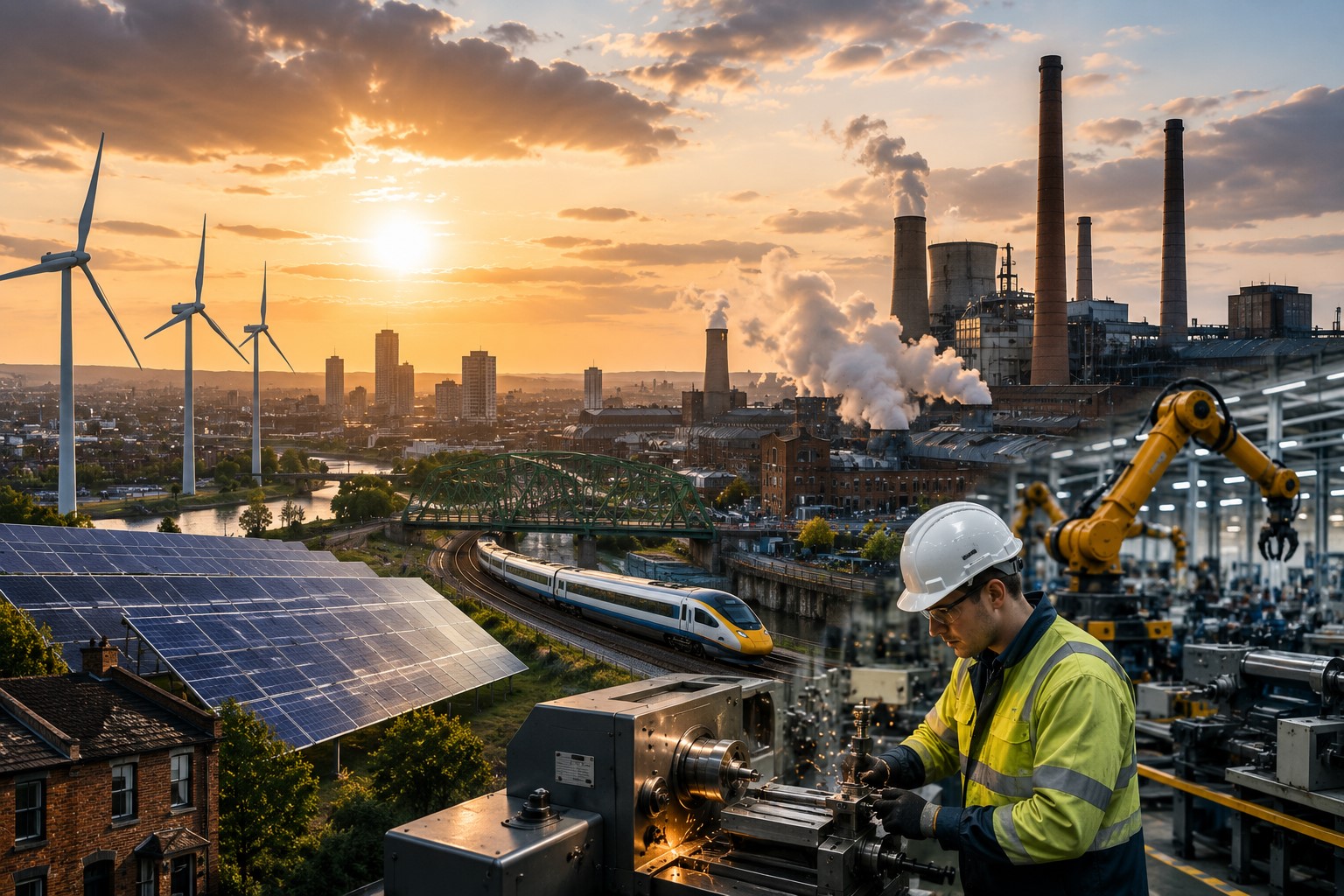
Andy Burnham’s Reindustrialisation Vision Faces the Challenge of Rebuilding Post-Industrial Britain
Andy Burnham has placed industrial revival at the center of his vision for Britain's future, arguing that the country must rebuild its manufacturing base and strengthen key industries if it is to deliver lasting economic growth. His proposal marks a significant shift from the free-market policies that dominated British politics for decades and reflects a growing belief that regional prosperity depends on reviving domestic production rather than relying primarily on financial services and globalization.
The renewed focus on reindustrialisation comes after decades of factory closures, declining manufacturing employment, and the economic struggles experienced across many former industrial communities. During the late 20th century and early 2000s, thousands of coal mines, steelworks, and manufacturing plants closed, leaving many towns searching for replacement industries. While retail parks, warehouses, and service-sector jobs filled some of the gap, many communities continued to experience lower wages, reduced opportunities, and slower economic growth.
Burnham argues that Britain should protect and expand strategic industries such as steel, defence, energy, food production, advanced manufacturing, and green technology. Drawing on his experience as Mayor of Greater Manchester, he believes regional governments should have greater authority to shape industrial policy, attract investment, and develop local economies through partnerships with businesses, universities, and research institutions.
His proposals also call for a more active role for government in supporting economic development. Rather than allowing market forces alone to determine industrial outcomes, Burnham envisions targeted public investment designed to strengthen manufacturing capacity, create skilled jobs, and reduce regional inequalities. Supporters say this approach could help rebuild communities that have struggled since the decline of Britain's traditional industries.
However, economists and political analysts warn that delivering such an ambitious transformation will be challenging. Rebuilding industrial capacity would require hundreds of billions of pounds in public and private investment over many years, while technological advances such as automation and artificial intelligence may limit the number of new manufacturing jobs created. Questions also remain over how these ambitions can be achieved while maintaining fiscal discipline and balancing government spending priorities.
The debate extends beyond economics. For many former industrial regions, manufacturing represented not only employment but also community identity, social stability, and local pride. The disappearance of large industries reshaped entire towns, contributing to economic hardship and lasting political frustration. Many observers believe any successful industrial strategy must therefore focus on rebuilding both economic opportunity and public confidence.
Burnham's vision has generated growing attention because it offers a clear alternative to the economic model that has shaped Britain for much of the past four decades. Whether his proposals can translate into meaningful economic renewal remains uncertain, but the renewed discussion around reindustrialisation signals a broader shift in how Britain's political leaders are approaching regional growth, manufacturing, and long-term national prosperity.
UKEcho News brings you accurate, independent reporting from across the UK and beyond.
Comments (0)
Sign in to join the discussion.
Be the first to comment.