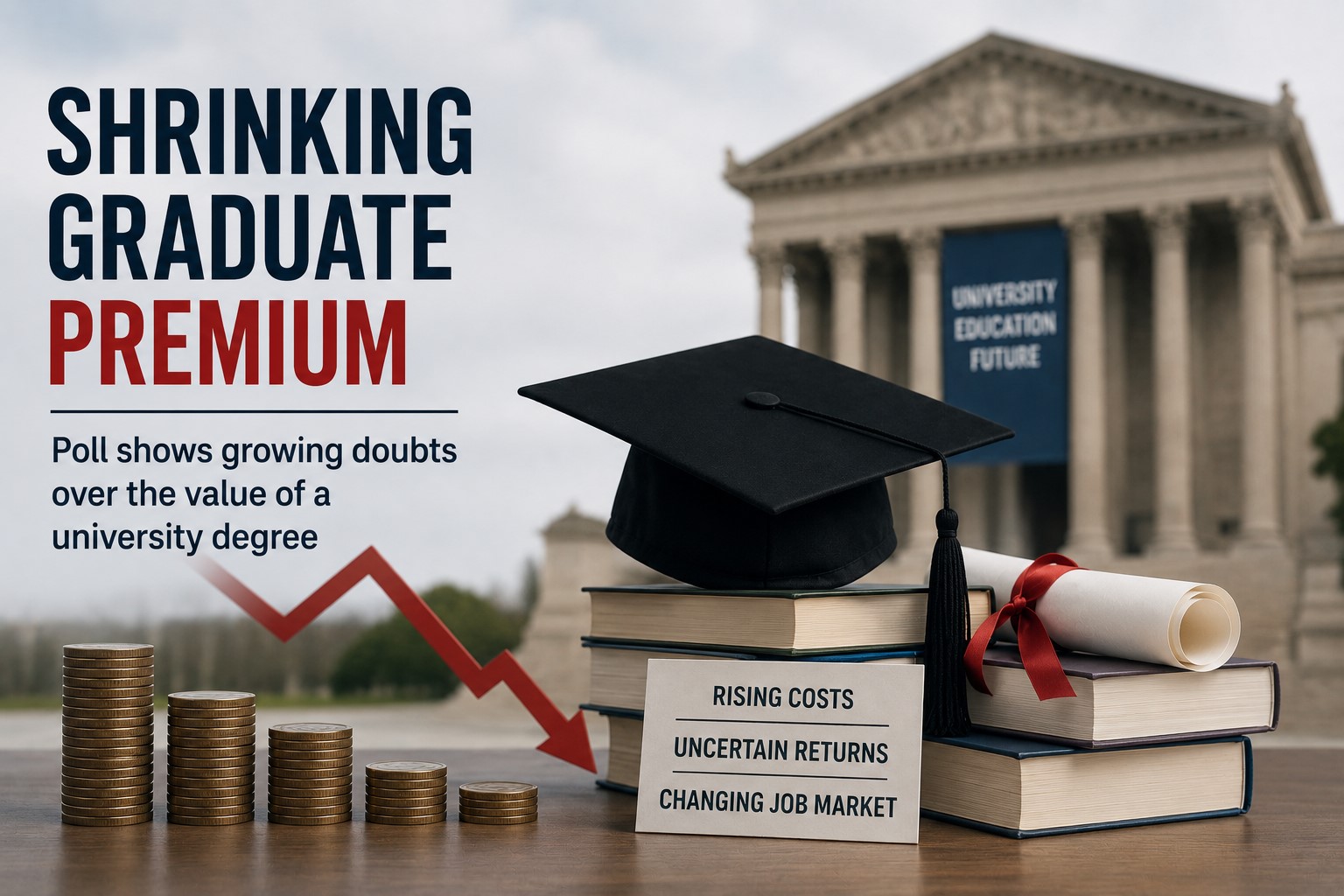
Public confidence in the value of a university degree is facing fresh scrutiny as concerns grow over the shrinking financial benefits traditionally associated with higher education.
Recent findings suggest that many people are questioning whether the rising cost of university education continues to justify the expected return on investment. The debate comes as graduates face increasing tuition debt, a competitive job market, and changing employer demands.
The so-called "graduate premium" — the earnings advantage often linked to obtaining a degree — appears to be narrowing for some students, prompting renewed discussion about the future of higher education.
Supporters of universities argue that degrees continue to provide valuable skills, career opportunities, and long-term personal development benefits. They point to higher employment rates and broader professional prospects among graduates compared with non-graduates.
However, critics argue that not all degrees deliver the same economic value, particularly as employers increasingly prioritize practical skills, work experience, and vocational qualifications. The growth of alternative career pathways has further intensified the conversation.
The issue is becoming increasingly important as students and families weigh the financial commitment required for higher education against uncertain economic conditions and evolving workforce trends.
As policymakers, universities, and employers assess the future of education, questions surrounding affordability, employability, and graduate outcomes are expected to remain central to the national debate.
The discussion highlights the broader challenge of ensuring higher education remains both accessible and economically valuable in a rapidly changing labour market.
UKEcho News brings you accurate, independent reporting from across the UK and beyond.
Comments (0)
Sign in to join the discussion.
Be the first to comment.