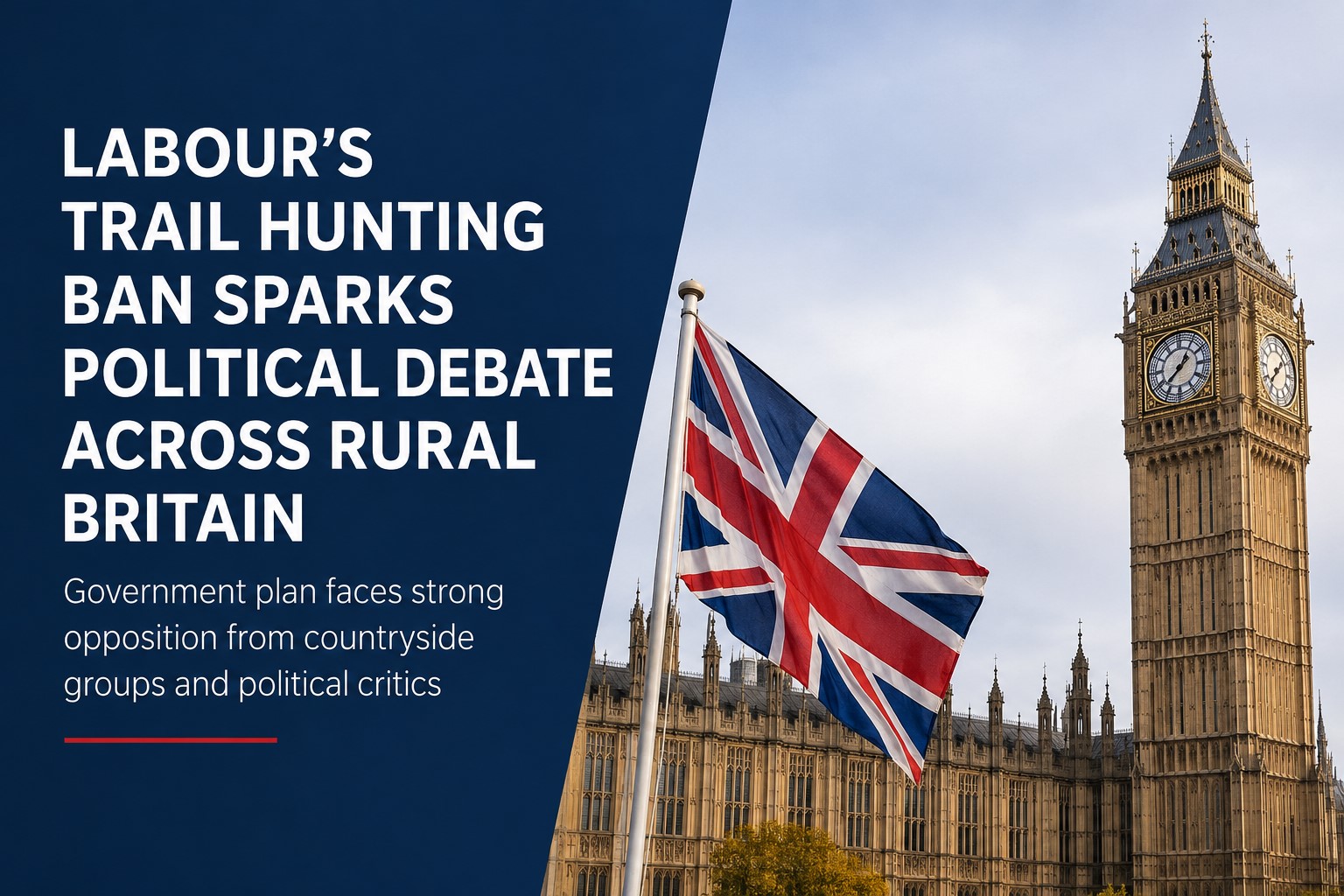
The UK government's proposed ban on trail hunting has ignited a fresh political battle, with critics warning that the move could deepen tensions between Westminster and rural communities.
Labour ministers have reaffirmed their commitment to outlaw trail hunting, arguing that the practice has too often been used as a cover for illegal fox hunting. The government says stronger legislation is needed to protect wildlife and close loopholes that have remained since the Hunting Act came into force in 2005.
However, countryside groups, hunting organizations, and several Conservative politicians have pushed back strongly against the proposal. They argue that trail hunting is a legal activity that supports rural traditions, local jobs, and community events across the country.
Opponents of the ban claim that existing laws already prohibit illegal fox hunting and that additional restrictions would amount to unnecessary legislative overreach. They also warn that hunts, kennels, and related rural businesses could face significant financial pressure if the plans move forward.
The debate has become part of a wider political discussion about Labour's relationship with rural Britain. Critics say countryside concerns such as farming, rural crime, transport, and economic development should take priority over new hunting legislation.
Meanwhile, animal welfare campaigners continue to support tighter restrictions, arguing that trail hunting has been used for years to circumvent existing hunting laws. They believe a complete ban would improve enforcement and strengthen animal protection measures.
The government has launched a public consultation to gather views before finalizing any legislation. The outcome is expected to be closely watched by both rural groups and animal welfare organizations as the issue remains one of the most divisive topics in British politics.
As the debate intensifies, the proposed ban is shaping up to be another major test of Labour's ability to balance animal welfare commitments with growing concerns from rural communities.
UKEcho News brings you accurate, independent reporting from across the UK and beyond.
Comments (0)
Sign in to join the discussion.
Be the first to comment.