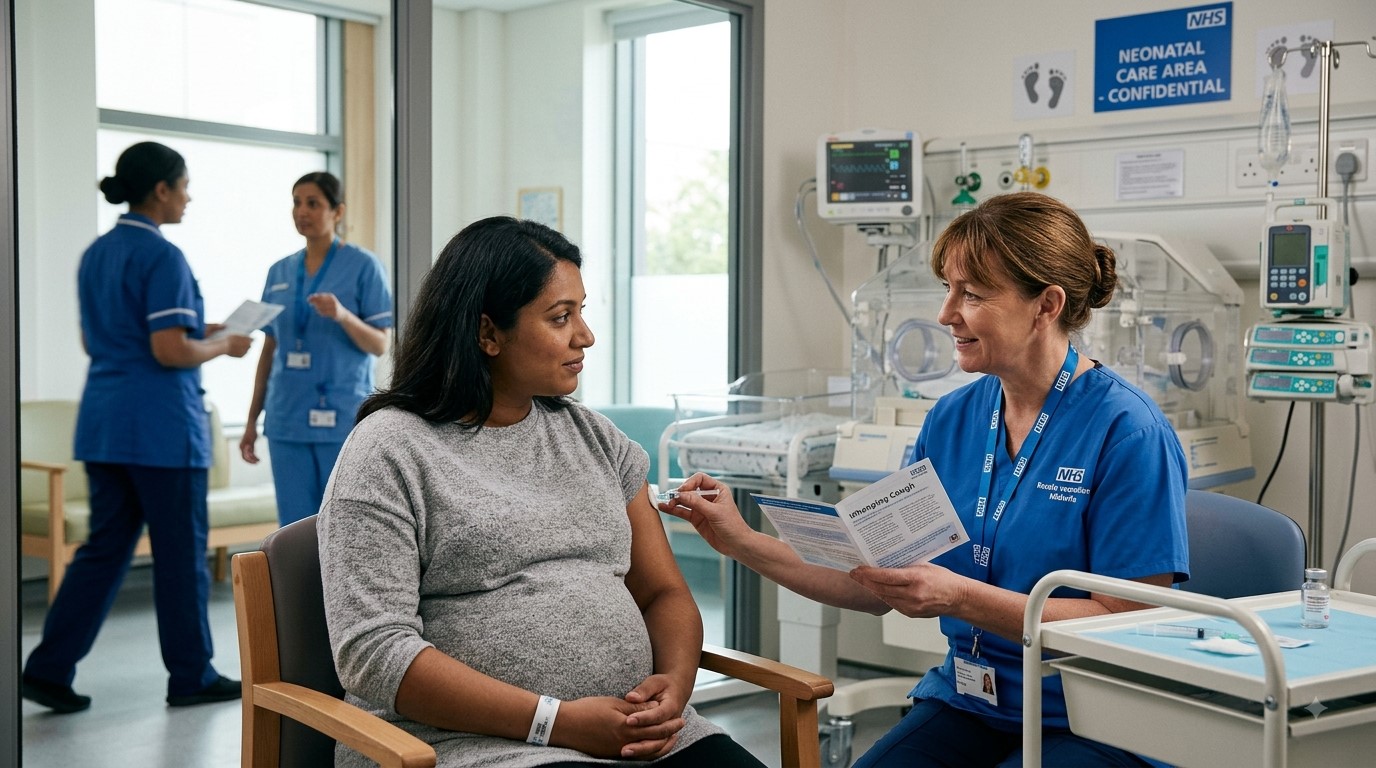
LONDON — New health data has revealed a major reduction in severe respiratory illness among newborns following the first full year of England's maternal RSV vaccination programme.
Figures published by the UK Health Security Agency show that intensive-care or high-dependency admissions among babies under six months with confirmed RSV chest infections fell by around 50% during winter 2025-26 compared with the previous season.
Across 20 NHS trusts monitored by the surveillance programme, 63 infants under six months were admitted to intensive or high-dependency care with confirmed RSV during 2025-26, compared with 131 the previous year.
The maternal vaccine is offered to women from 28 weeks of pregnancy. Antibodies produced by the mother can cross the placenta and help protect the baby during the first months of life, when severe RSV infection can be particularly dangerous.
The data also showed lower peak levels of infant bronchiolitis A&E attendances and a shorter peak season, adding to evidence that vaccination is reducing the burden of serious RSV disease.
However, vaccination coverage is not universal. About 61.7% of women giving birth received an RSV vaccine during the 12 months to February 2026, meaning many babies remain without the additional protection provided through maternal vaccination.
Health officials are urging eligible pregnant women to discuss vaccination with their maternity service or GP, particularly as babies born in late summer and autumn face higher risks of hospital admission during the RSV season.
The latest figures provide one of the clearest early signs of the programme's impact, while also highlighting the importance of maintaining high vaccination coverage ahead of future winter RSV seasons.
UKEcho News brings you accurate, independent reporting from across the UK and beyond.
Comments (0)
Sign in to join the discussion.
Be the first to comment.