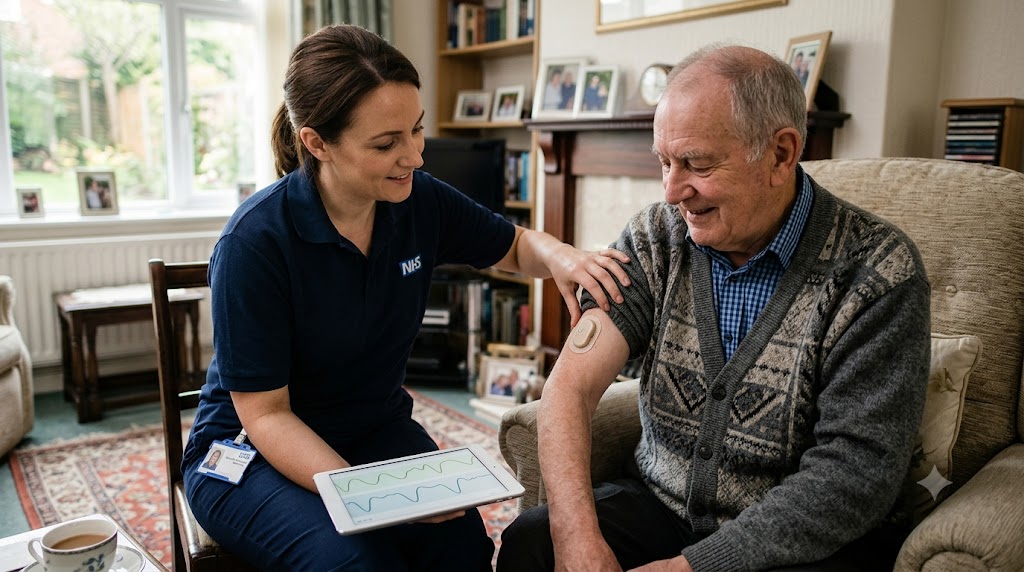
A wearable chest patch could help NHS teams monitor patients receiving hospital-level treatment at home, according to research published by Oxford University Hospitals on 13 October 2026. The findings could support the expansion of hospital-at-home services, which provide care for selected patients who might otherwise need to stay in hospital.
Wearable Technology Monitors Vital Signs
Researchers from the Universities of Oxford and Warwick studied 26 adults receiving care through Oxford University Hospitals’ acute Hospital at Home service. Participants wore a chest patch that automatically recorded heart rate and breathing rate, with readings made available to clinical teams in real time for up to seven days.
The patch successfully captured heart-rate readings during 89% of four-hour monitoring periods, while breathing-rate readings were captured during 75% of those periods. By comparison, patients or carers recorded additional measurements such as blood pressure, oxygen levels and temperature in a paper diary, with entries completed by just over half of patients each day.
Could Support More Care Outside Hospitals
Remote monitoring may give healthcare professionals a clearer picture of a patient’s condition between home visits, helping them identify possible deterioration and decide when further assessment is needed.
The researchers cautioned that this was a small, non-randomised study conducted within one NHS trust. Further research is needed to determine which patients would benefit most, whether wearable monitoring alone provides sufficient information and whether the approach improves outcomes cost-effectively.
The findings add to ongoing NHS efforts to deliver more treatment in community settings while maintaining patient safety.
UKEcho News brings you accurate, independent reporting from across the UK and beyond.
Comments (0)
Sign in to join the discussion.
Be the first to comment.