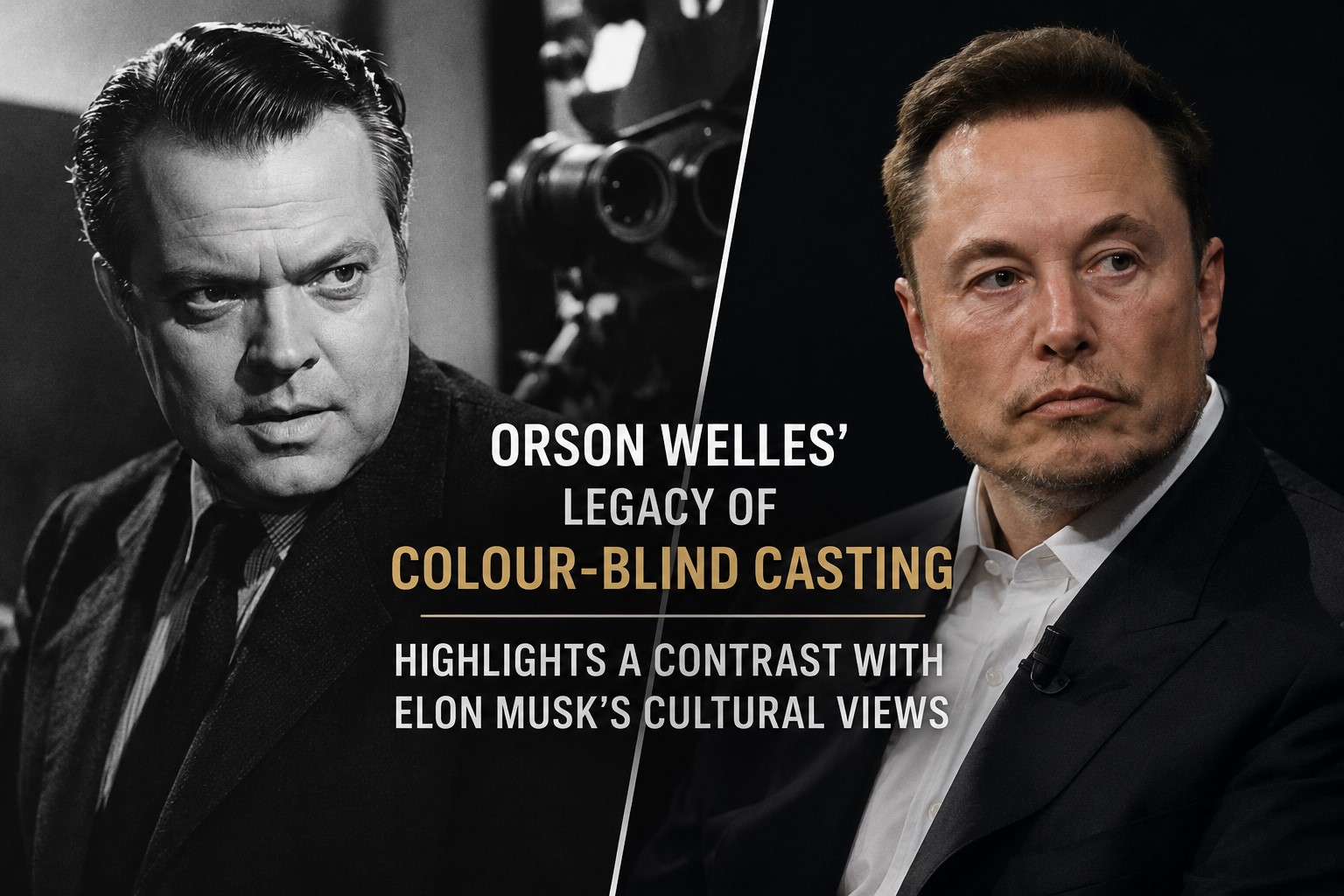
Long before debates over representation and diversity became central to modern entertainment discussions, filmmaker and actor Orson Welles was experimenting with casting choices that challenged traditional industry norms. His approach to colour-blind casting helped shape conversations around inclusion decades before such practices became mainstream.
Welles, widely recognized for pushing creative boundaries throughout his career, often focused on talent and performance over conventional expectations surrounding race and background. Supporters of his work argue that his casting philosophy reflected a belief that storytelling should prioritize artistic vision and opportunity rather than rigid social conventions.
Today, conversations around representation in film and media have become increasingly politicized, drawing commentary from influential public figures across business, technology, and entertainment. Some observers point to comments and cultural criticisms from figures like Elon Musk as representing a different perspective on how diversity initiatives influence creative industries.
The contrast between these viewpoints highlights a broader debate about whether modern entertainment should actively pursue representation goals or allow creative decisions to develop without structured diversity frameworks.
Film historians note that Welles’ contributions were not only technical or cinematic but also cultural. His willingness to challenge established practices helped open conversations about who gets opportunities on stage and screen, influencing future generations of filmmakers.
UKEcho News brings you accurate, independent reporting from across the UK and beyond.
Comments (0)
Sign in to join the discussion.
Be the first to comment.