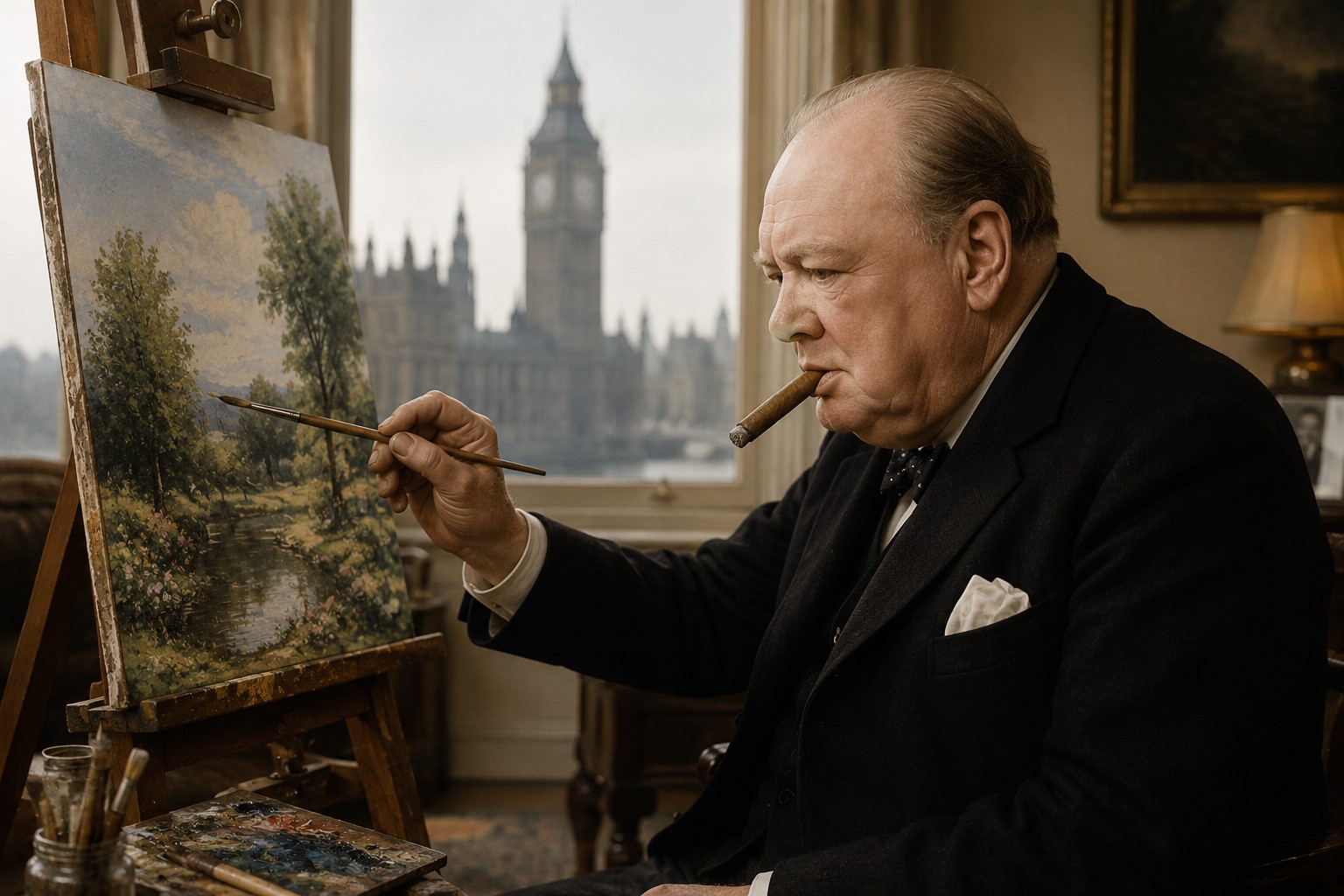
While Winston Churchill is best remembered for leading Britain through one of history’s most difficult periods, fewer people know that painting became one of his most important personal escapes during times of immense pressure.
Churchill first turned to painting in the early 20th century during a difficult period in his political career. What began as a hobby eventually developed into a lifelong passion, providing him with a creative outlet away from politics, public scrutiny, and the pressures of leadership.
During the years surrounding World War II, Churchill faced enormous responsibility as Britain confronted the threat of fascism across Europe. Historians say painting offered moments of calm and reflection amid the demands of wartime decision-making and constant political challenges.
He often painted landscapes, gardens, lakes, and countryside scenes, preferring bright colors and peaceful settings that contrasted sharply with the realities of war. Supporters and historians have described painting as a form of therapy that helped him manage stress and maintain emotional balance.
Churchill himself spoke openly about the benefits of creativity, suggesting that artistic pursuits could provide relief from anxiety and mental exhaustion. His interest in art eventually led him to produce hundreds of paintings throughout his lifetime.
Beyond its personal importance, Churchill’s artistic side has become an enduring part of his legacy, showing a different dimension of one of the 20th century’s most influential wartime leaders.
UKEcho News brings you accurate, independent reporting from across the UK and beyond.
Comments (0)
Sign in to join the discussion.
Be the first to comment.