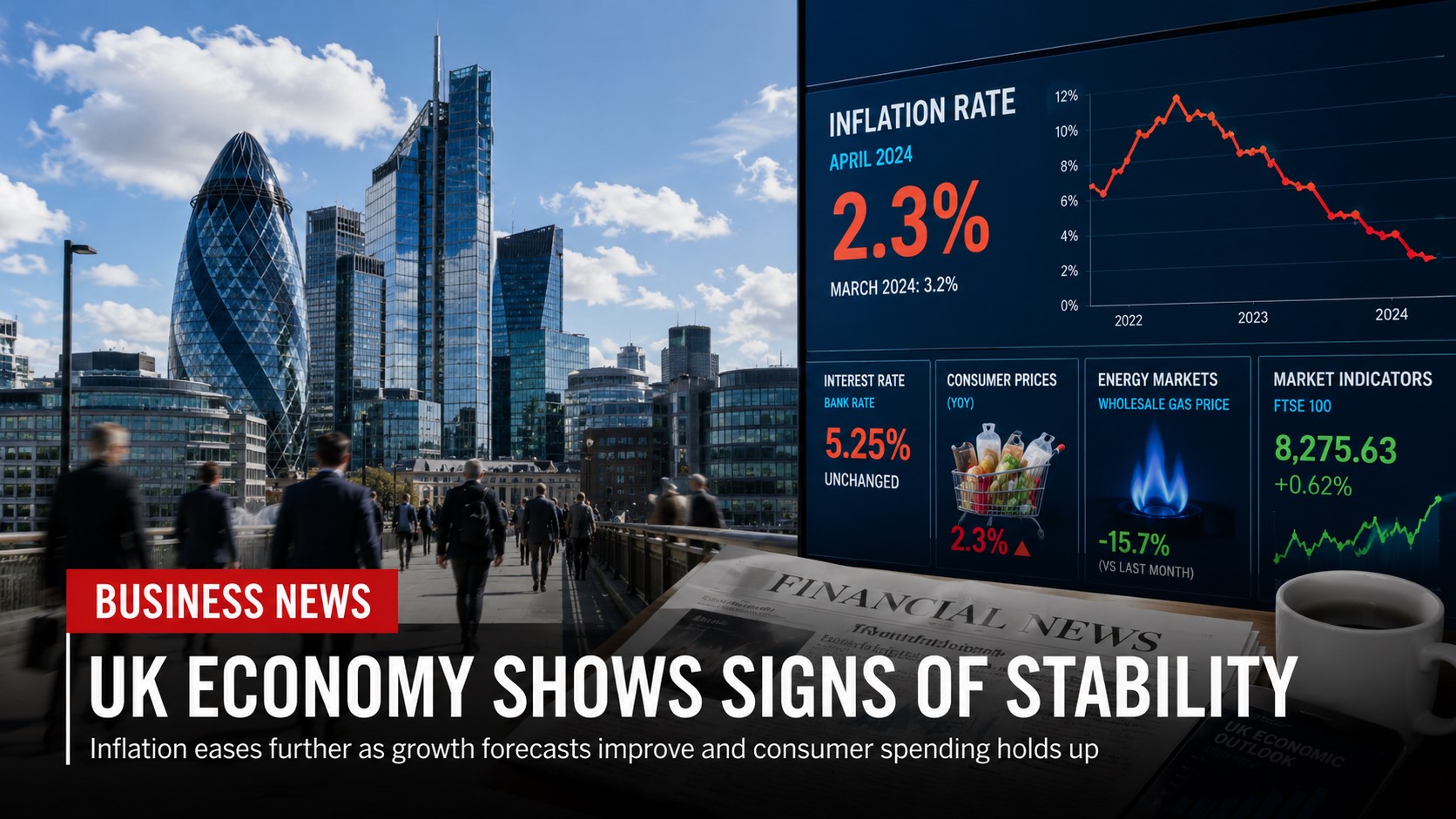
Economists have suggested that UK inflation is likely to remain below 4% over the coming months, offering some reassurance to households and businesses despite continued uncertainty surrounding global energy markets.
Recent inflation figures showed that consumer price growth remained unchanged at 2.8%, surprising many analysts who had expected a modest increase. While transport-related costs and higher road tax charges placed upward pressure on prices, these effects were largely offset by slowing food inflation.
Food prices have emerged as a key factor helping to contain overall inflation, with some categories recording price declines compared with the previous month. Analysts believe lower producer costs could continue to ease food inflation in the short term.
Economic experts note that the full impact of higher energy prices linked to tensions in the Middle East has yet to be fully reflected in the wider economy. However, current forecasts suggest that inflation could rise towards 3.5% later this year as household energy bills increase.
Despite those concerns, economists remain cautious about predictions of a major inflation surge. They argue that weaker wage growth and limited corporate pricing power reduce the likelihood of the broader price increases that followed previous energy shocks.
Services inflation remains elevated but relatively stable, while business surveys indicate that companies are becoming more cautious about passing higher costs on to consumers.
Attention is now turning to the Bank of England, which is expected to maintain interest rates at current levels while monitoring developments in inflation, wage growth and energy markets.
Financial markets are also closely watching global oil and gas prices. Any significant escalation in geopolitical tensions could increase inflationary pressures, while stabilising energy markets may help keep price growth under control.
For businesses and consumers alike, the latest forecasts suggest that inflation remains a challenge but is unlikely to reach the levels seen during previous cost-of-living crises unless there is a major disruption to global energy supplies.
The coming months will be crucial in determining whether the UK economy can maintain stable inflation while supporting growth and protecting household finances.
UKEcho News brings you accurate, independent reporting from across the UK and beyond.
Comments (0)
Sign in to join the discussion.
Be the first to comment.