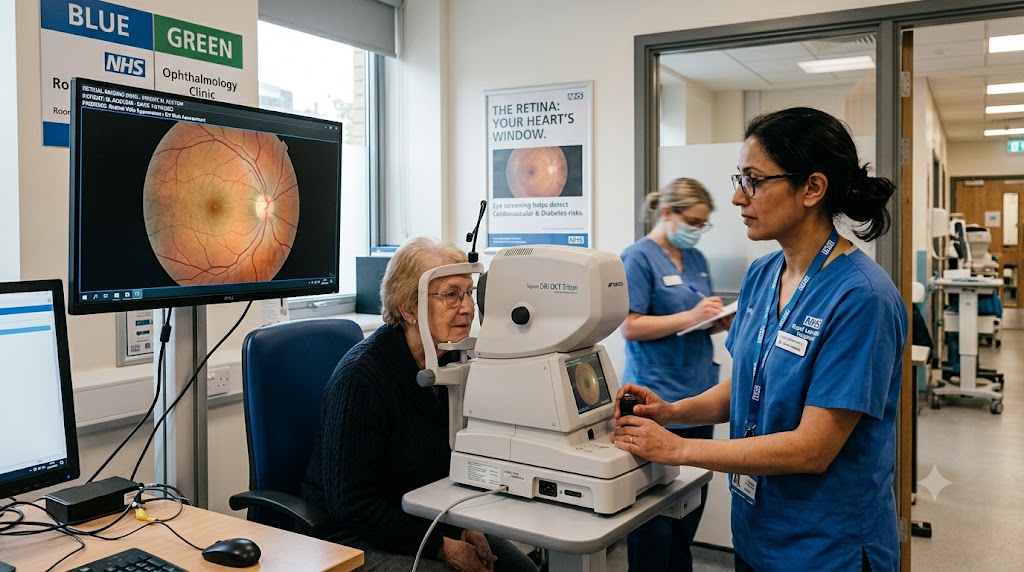
Researchers in the UK have identified a potential new way of detecting atrial fibrillation (AF) — a common heart rhythm disorder linked to stroke — by analysing changes in the eyes.
Scientists from Moorfields Eye Hospital NHS Foundation Trust and UCL's Institute of Ophthalmology studied health and eye data from more than 90,000 patients. They found that people with AF tended to have thinner layers in the retina.
Importantly, similar retinal changes were observed in some people who went on to develop AF years later, suggesting that eye imaging could potentially help identify people at higher risk before the condition is diagnosed through traditional methods.
Researchers stress that eye scans are not currently a replacement for ECG testing, but they could eventually become an additional, non-invasive screening tool for cardiovascular risk.
The findings add to growing interest in “oculomics”, an emerging field exploring how retinal images could provide clues about diseases affecting other parts of the body.
UKEcho News brings you accurate, independent reporting from across the UK and beyond.
Comments (0)
Sign in to join the discussion.
Be the first to comment.