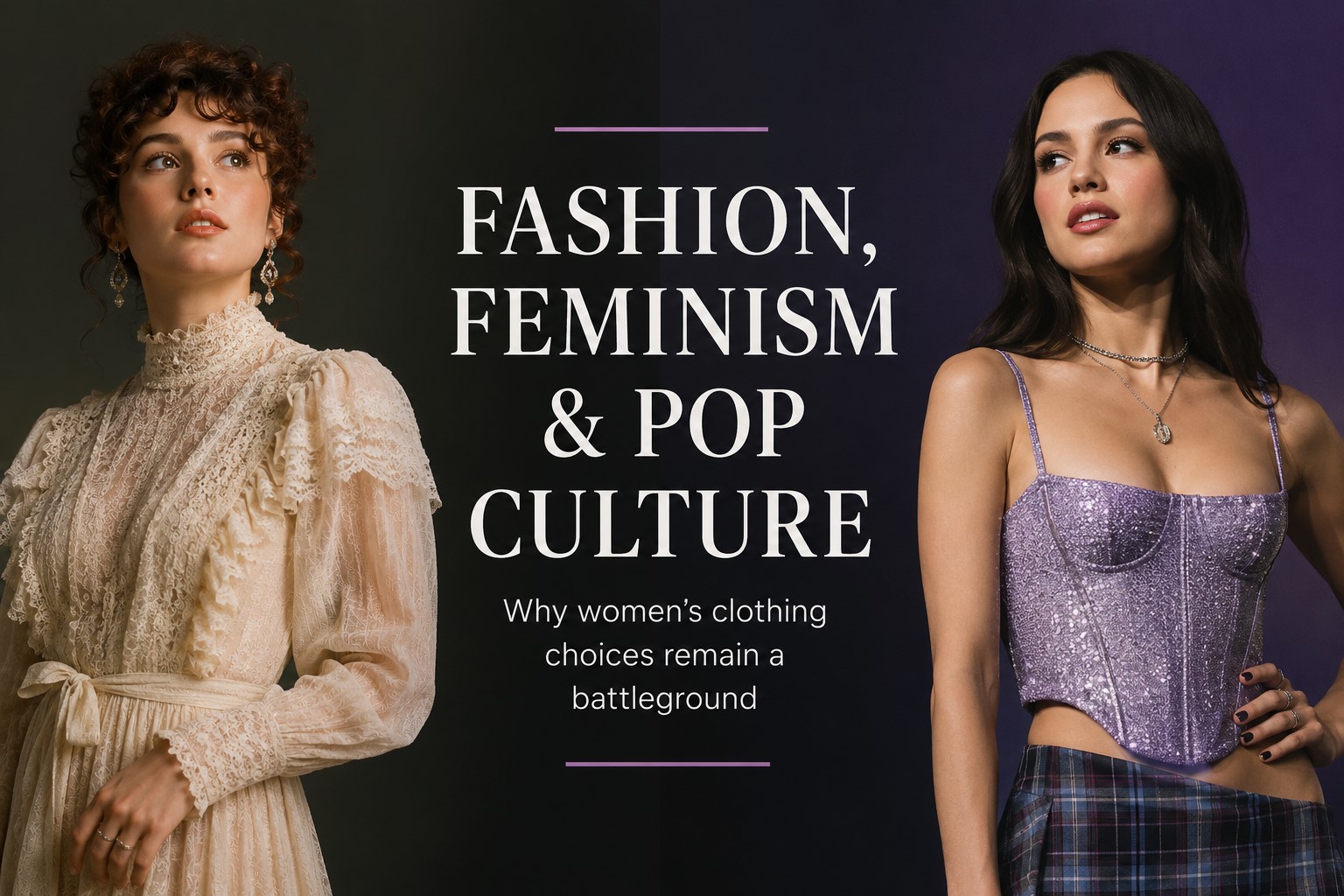
A growing debate in popular culture is once again raising questions about how women are expected to dress, and who gets to decide what those choices mean.
The discussion has gained momentum following contrasting public reactions to artists such as CMAT and Olivia Rodrigo. While some critics praise fashion styles that challenge traditional beauty standards, others celebrate artists who embrace glamorous, body-conscious looks. The differing responses have sparked wider conversations about feminism, personal freedom, and the continued influence of the so-called "male gaze."
Supporters of individual expression argue that women should not be judged based on whether they choose modest, provocative, vintage, glamorous, or unconventional fashion. They say reducing clothing choices to political statements risks creating a new set of expectations rather than expanding freedom.
Critics of rigid beauty standards, however, believe fashion remains deeply connected to social pressures and cultural expectations. They argue that discussions about celebrity style reveal how society continues to scrutinize women's appearance more heavily than men's.
The debate highlights a broader cultural shift taking place across music, entertainment, and social media. Increasingly, audiences are questioning whether empowerment comes from rejecting traditional ideals, embracing them, or simply having the freedom to choose without judgment.
As fashion trends evolve and celebrity influence grows, the conversation underscores a central question in modern culture: can women express themselves freely without their clothing being viewed as a statement about politics, feminism, or social values?
UKEcho News brings you accurate, independent reporting from across the UK and beyond.
Comments (0)
Sign in to join the discussion.
Be the first to comment.