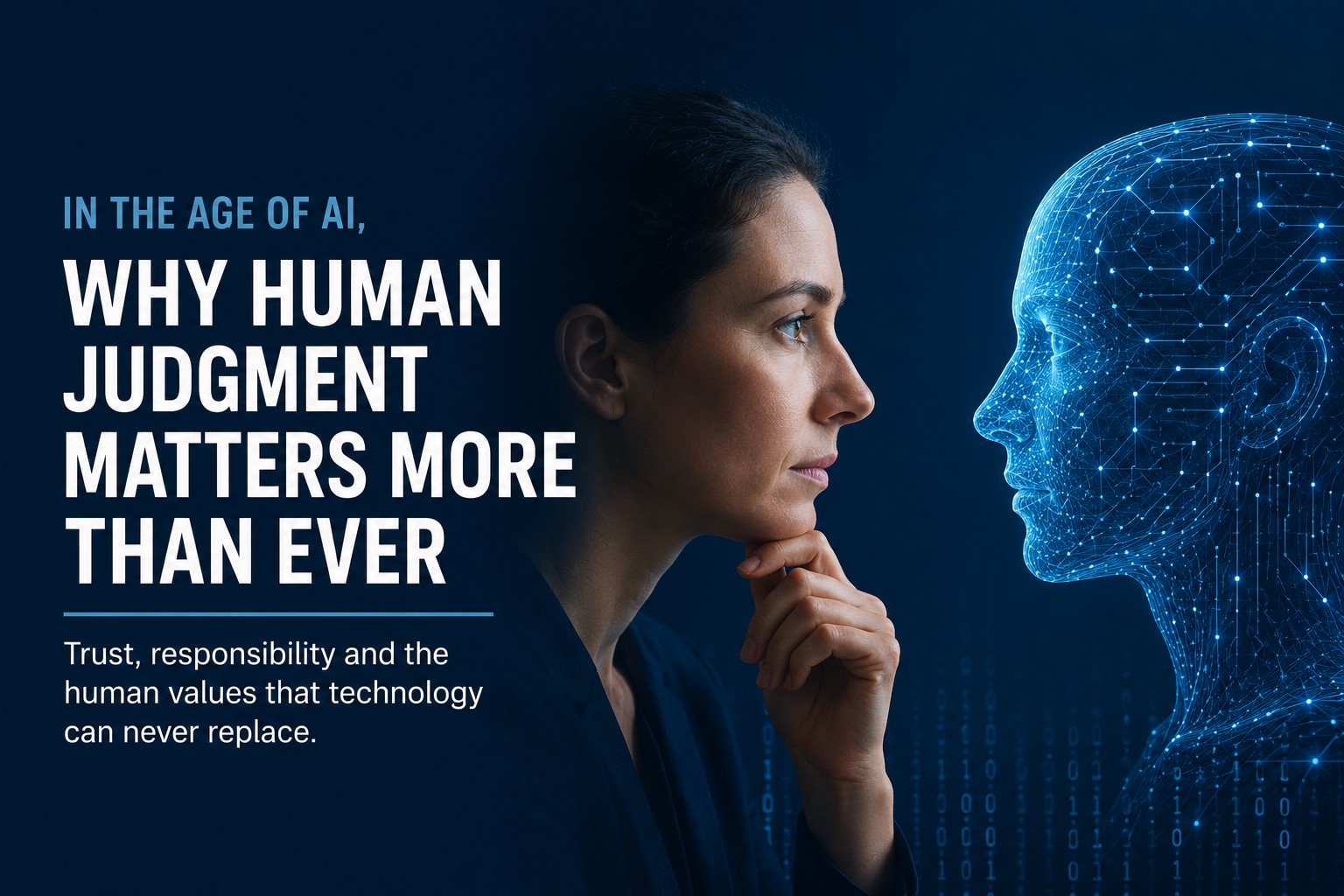
As artificial intelligence becomes increasingly embedded in everyday life, a growing debate is emerging over how much trust society should place in machines and what role human judgment should continue to play.
AI systems are now influencing decisions across business, education, healthcare, media, and government. While supporters argue that these technologies can improve efficiency and provide valuable insights, critics warn that excessive reliance on algorithms could weaken human accountability and decision-making.
The discussion is no longer just about technology. It is about trust, responsibility, and the values that shape modern society. As AI tools become more powerful, questions are being raised about whether machines should guide decisions that affect people's lives, careers, and communities.
Experts caution that artificial intelligence operates using patterns and data rather than human experience, empathy, or moral reasoning. While AI can process information at extraordinary speed, it cannot fully understand context, emotions, or the complexities of human relationships.
The debate comes at a time when governments, businesses, and institutions are increasingly exploring how AI should be regulated and integrated into public life. Many argue that technological progress must be accompanied by safeguards that ensure humans remain responsible for critical decisions.
As society navigates a rapidly changing digital landscape, the challenge may not be choosing between humans and machines. Instead, it is determining how technology can support human judgment without replacing the qualities that make people uniquely capable of understanding one another.
The conversation reflects a broader question facing modern democracies: in an era of powerful algorithms, how can trust, accountability, and human values remain at the center of decision-making?
UKEcho News brings you accurate, independent reporting from across the UK and beyond.
Comments (0)
Sign in to join the discussion.
Be the first to comment.