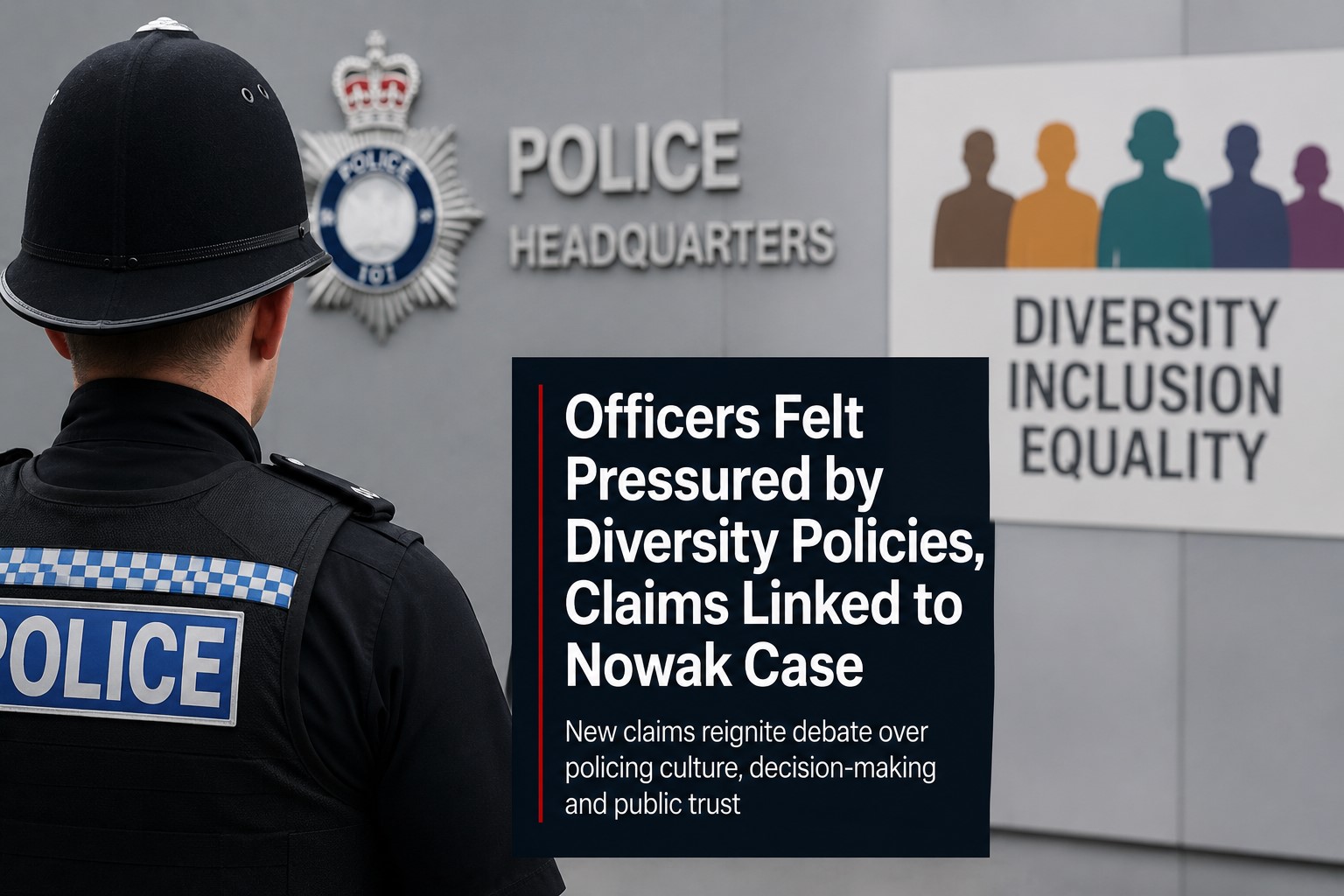
Fresh claims emerging from the fallout surrounding the Henry Nowak case have intensified debate over policing culture, diversity policies, and decision-making within UK law enforcement.
According to reports, some officers involved in the wider controversy felt under pressure from diversity and inclusion expectations when carrying out their duties. The allegations have added a new dimension to an already high-profile national debate surrounding policing standards and public confidence.
The claims have sparked renewed discussion about how police forces balance operational decision-making, community relations, and diversity objectives.
Supporters of diversity initiatives argue that such policies are essential for improving trust between police and increasingly diverse communities. Critics, however, contend that officers should be able to make operational decisions solely based on public safety and professional judgment without concerns about external pressures.
The latest revelations come as scrutiny of police procedures remains intense following the Henry Nowak case, which has triggered political debate, public protests, and calls for greater transparency.
Senior policing figures have repeatedly stressed the importance of maintaining public trust while ensuring officers receive appropriate support and guidance when responding to complex situations.
The controversy is likely to fuel wider discussions about recruitment, training, accountability, and the role diversity policies play within modern policing. Political leaders are also facing growing pressure to address concerns while avoiding actions that could undermine confidence in law enforcement institutions.
As investigations and public debate continue, questions surrounding policing culture, decision-making, and accountability remain firmly in the national spotlight.
The issue highlights broader challenges facing police forces across Britain as they seek to balance operational effectiveness with evolving public expectations and community engagement.
UKEcho News brings you accurate, independent reporting from across the UK and beyond.
Comments (0)
Sign in to join the discussion.
Be the first to comment.