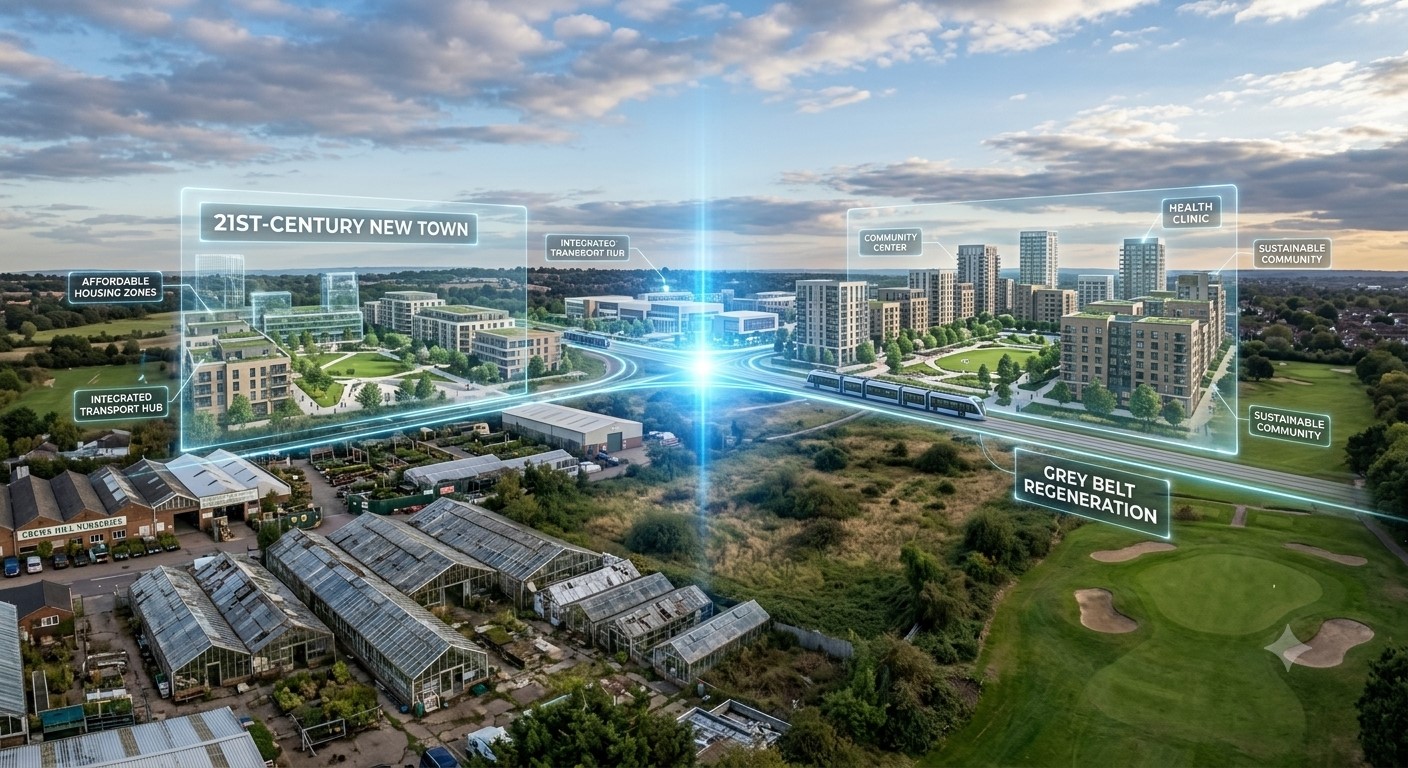
Enfield’s Battle Highlights the Urgent Need for Labour’s 21st-Century New Towns
Just as in the mid-20th century under Clement Attlee and Harold Wilson, new towns are once again set to become a defining legacy for the Labour government. To ease the country's desperate housing crisis, seven brand-new settlements have been proposed. However, the battle over Enfield serves as a stark reminder of the political localism and NIMBY resistance standing in the way of progress.
Political Shifts and the Enfield Stand-Off Enfield was designed as a flagship model for a 21,000-home development, originally backed by its former Labour council to help thousands of families trapped in temporary accommodation and long waiting lists. Following May’s elections, a minority Conservative leadership—supported by Green councillors—took control and formally declared its withdrawal from the process to protect the local green belt.
Yet, local councils do not hold absolute authority over major national infrastructure. Strategic decisions regarding transport, utilities, and regional housing fall under regional governance. In London, Mayor Sadiq Khan holds oversight and strongly supports new town developments in both Enfield and Thamesmead to address severe housing shortages.
The "Grey Belt" Reality vs. Green Belt Myths While local campaigners argue against developing Enfield's green belt, much of the designated land is far from pristine wilderness:
- Crews Hill: Characterized by haphazard clusters of glasshouses and commercial garden centers, fitting the government's definition of "grey belt"—technically protected, but already heavily developed.
- Chase Park: Categorized as low-quality agricultural land.
- Golf Courses: Plans include building 5,500 homes over an area that includes the private Crews Hill golf club. In a borough with five other golf courses, prioritising exclusive recreational turf over affordable homes highlights a sharp contrast in political values.
Learning from the Past: Building Modern Settlements Housing Minister Matthew Pennycook and urban planners are drawing lessons from previous developments like Milton Keynes—which, despite early skepticism, is now recognized as one of the UK’s best places to live.
Unlike older suburban garden cities built around car ownership, 21st-century new towns will focus on high-density living anchored by robust public transport networks. High-density design ensures a large enough population base to sustain frequent bus services, vibrant retail hubs, health clinics, schools, and local businesses, delivering long-term civic value over isolated suburban sprawl.
UKEcho News brings you accurate, independent reporting from across the UK and beyond.
Comments (0)
Sign in to join the discussion.
Be the first to comment.