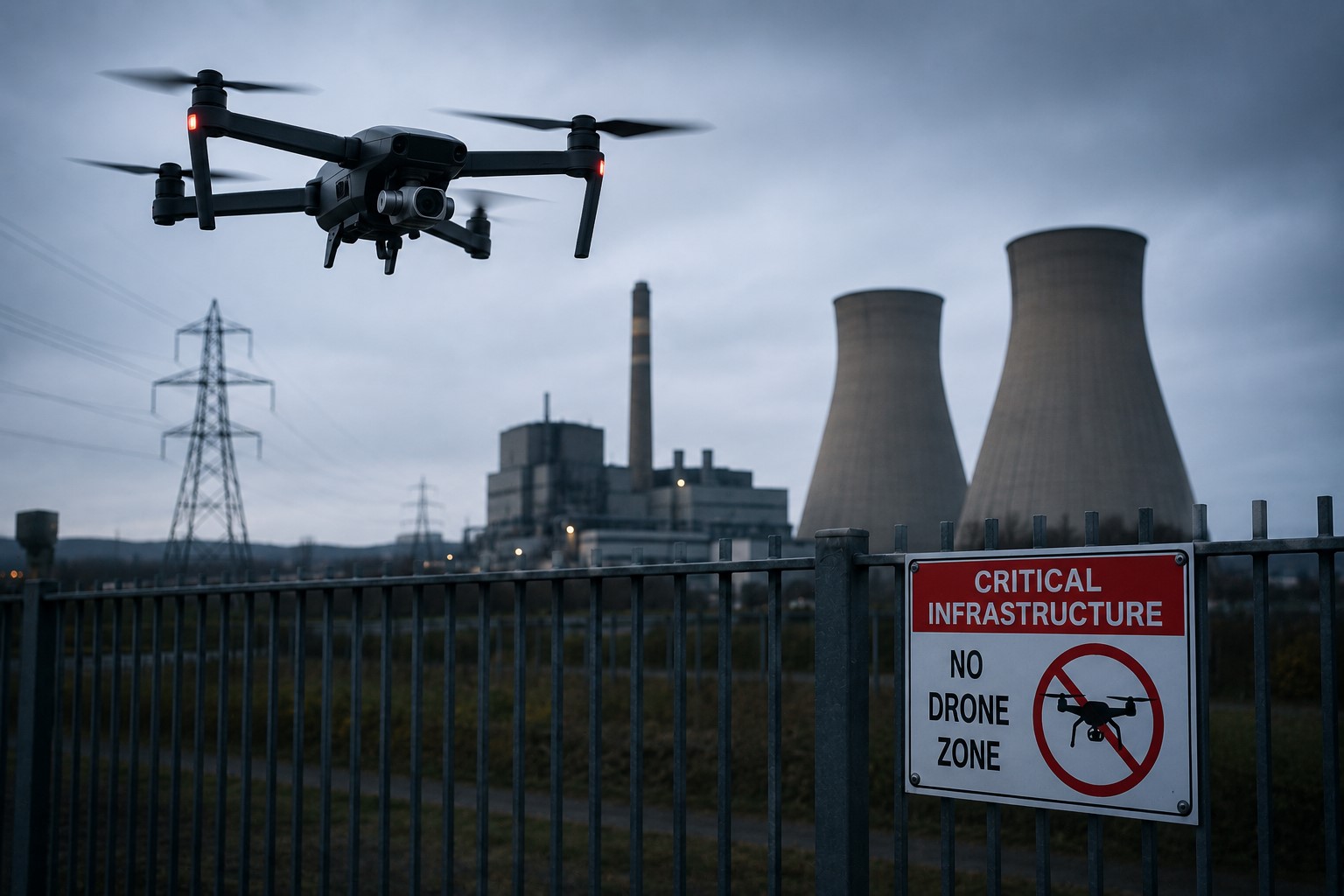
Security experts are warning that the increasing use of advanced drone technology is creating new challenges for the protection of Britain's critical energy infrastructure.
As drones become more sophisticated, concerns are growing about their potential use near key facilities including power stations, electricity networks, fuel storage sites, and other strategically important assets. Industry leaders and security specialists are calling for stronger monitoring systems and enhanced safeguards to address emerging risks.
The issue has become increasingly significant as critical infrastructure operators face evolving security threats in a rapidly changing technological landscape. Drones can provide legitimate commercial and industrial benefits, but experts caution that they may also be exploited for unauthorized surveillance, disruption, or other malicious activities.
Energy security remains a major priority for the UK, particularly as the country continues investing in renewable energy projects, electricity grid modernization, and long-term resilience planning. Protecting these assets is viewed as essential to maintaining reliable energy supplies and economic stability.
Government agencies, regulators, and infrastructure operators are reportedly reviewing current security measures to ensure they remain effective against emerging aerial threats. New technologies designed to detect and track drones are also attracting increased attention.
The debate highlights the growing intersection between technology, national security, and critical infrastructure protection. As drone capabilities continue to evolve, experts believe governments and industry will need to adapt quickly to address potential vulnerabilities.
With energy systems becoming more interconnected and technologically advanced, safeguarding vital infrastructure is expected to remain a key national security priority in the years ahead.
UKEcho News brings you accurate, independent reporting from across the UK and beyond.
Comments (0)
Sign in to join the discussion.
Be the first to comment.