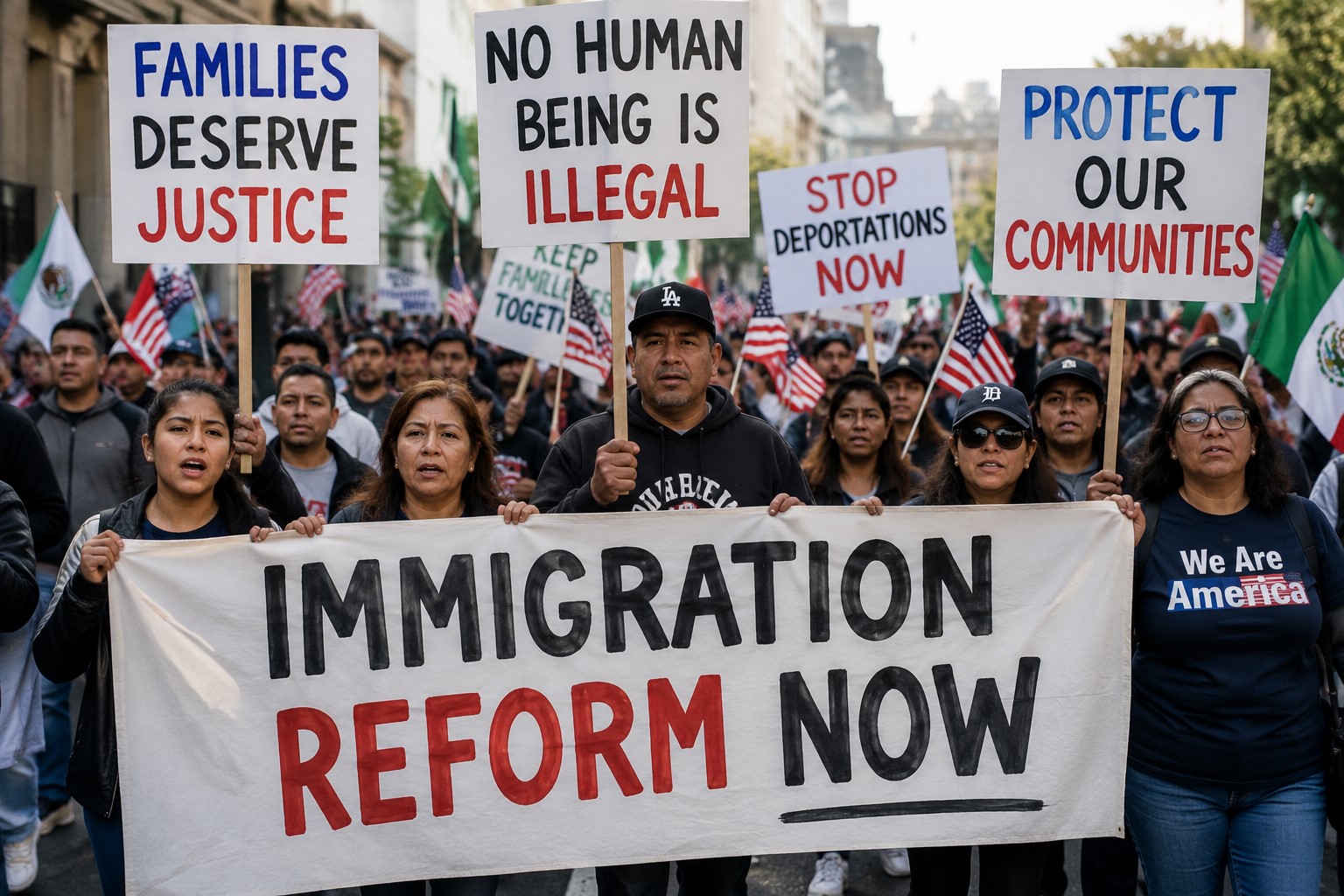
The fatal shooting of an undocumented construction worker during an immigration enforcement operation in Houston has renewed debate over U.S. immigration policies and their impact on Latino communities.
Lorenzo Salgado Araujo, who had lived in the United States for more than 35 years, was on his way to work when he was stopped by federal immigration agents during an Immigration and Customs Enforcement (ICE) operation. He was shot during the encounter and later died in hospital. The Department of Homeland Security has stated that the agent involved acted in self-defense, while community members and advocates have questioned the circumstances surrounding the incident and called for greater transparency.
The case has intensified concerns among many Latino Americans about immigration enforcement practices, racial profiling, and the treatment of both undocumented immigrants and legal residents. Advocacy groups argue that heightened enforcement efforts have created fear within communities, with many families worried about detention, deportation, and separation.
The incident has also reignited discussion about long-standing immigration reform proposals. Many policy experts continue to argue that millions of undocumented immigrants who have lived and worked in the United States for decades should have a legal pathway to permanent status, particularly those with established family and economic ties to the country.
At the same time, political analysts note that Latino voters remain a diverse and influential voting bloc with a wide range of priorities. Although a majority supported Democratic candidate Kamala Harris in the 2024 presidential election, a significant share of Latino voters also backed President Donald Trump, reflecting differing views on the economy, border security, and immigration policy.
Community leaders say the current moment presents an opportunity for lawmakers from both major parties to pursue comprehensive immigration reform that balances stronger border security with an earned pathway to legal status for long-term undocumented immigrants. They argue that addressing both concerns could help restore trust and provide greater stability for millions of families across the United States.
UKEcho News brings you accurate, independent reporting from across the UK and beyond.
Comments (0)
Sign in to join the discussion.
Be the first to comment.