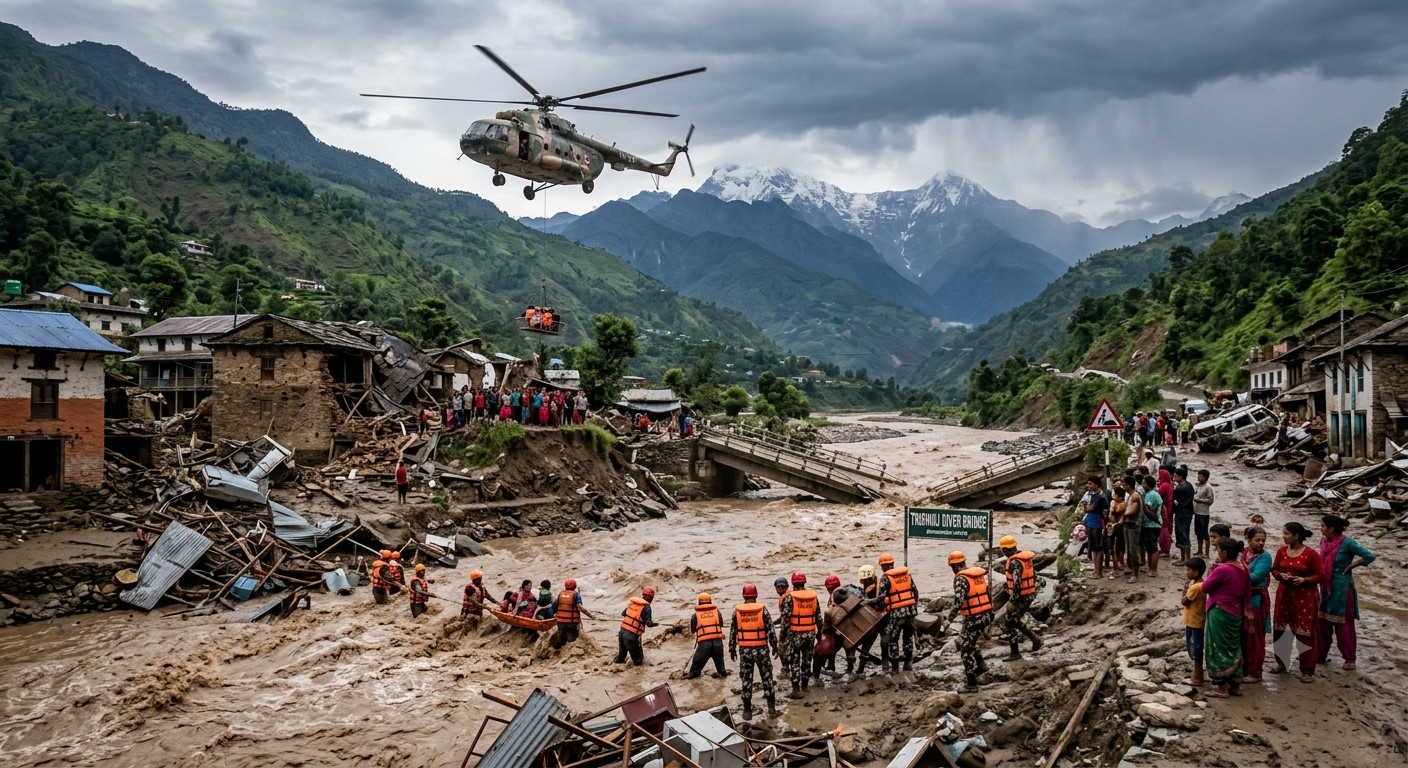
Devastating Himalayan Floods Trigger $5 Billion Reconstruction Effort in Nepal
An unprecedented climate-driven flood disaster along the Nepal-China border has claimed over 1,000 lives and left nearly 4,000 people missing, prompting Nepali officials to request urgent international climate assistance.
Disaster Overview & Immediate Impact
- Trigger Event: A partial glacier collapse in Tibet sent a massive torrent of ice and rock into the valley below, damming the Lhende River before bursting and sending flash floods down the Bhotekoshi and Trishuli rivers.
- Casualties: The death toll has surpassed 1,000 (987 confirmed in Nepal and 16 in China). Disaster agencies report 3,916 people missing in Nepal, including 583 foreign nationals.
- Geographic Damage: Severe destruction to villages, roads, and critical infrastructure across the northern Rasuwa and Nuwakot districts.
Political & Financial Response
- Reconstruction Costs: Finance Minister Swarnim Wagle estimates initial recovery costs could reach $3.6 billion to $5 billion—substantially less than the $9 billion required following the 2015 earthquake.
- Call for Global Action: Prime Minister Balendra Shah categorized the catastrophe as an unprecedented climate change event and urged Nepal to demand stronger action and loss-and-damage support from high-emitting nations.
- Rescue Operations: Military and emergency personnel continue search-and-rescue operations despite hazardous terrain, unstable slopes, and severe weather.
Long-Term Climate Vulnerability Research from the International Center for Integrated Mountain Development (ICIMOD) highlights that accelerated glacial melt, degrading permafrost, and erratic rainfall are drastically heightening disaster risks in the Hindu Kush region. According to the Coalition for Disaster Resilient Infrastructure, Nepal faces an average annual loss of $760 million from climate hazards, with over $124 billion worth of national infrastructure currently exposed to climate-driven threats.
UKEcho News brings you accurate, independent reporting from across the UK and beyond.
Comments (0)
Sign in to join the discussion.
Be the first to comment.