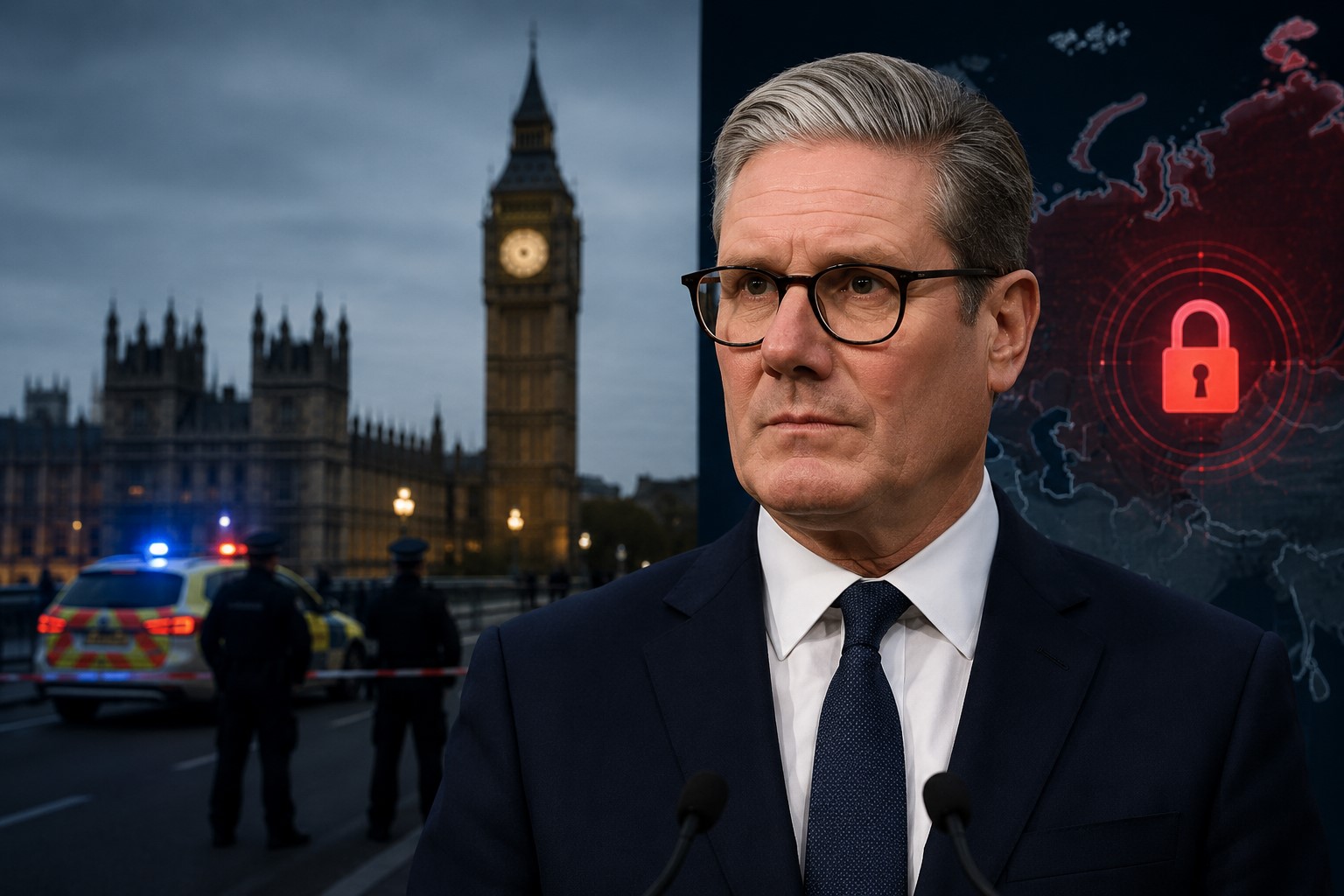
Fresh questions over foreign interference in British politics have emerged after reports linked a Russian-speaking network to a series of arson attacks on properties associated with Prime Minister Keir Starmer.
The controversy follows court proceedings involving individuals convicted over attacks on properties connected to Starmer, including a former residence and other locations linked to the Prime Minister. Investigations reportedly pointed to communications with a Russian-speaking handler operating through encrypted messaging platforms.
Speaking on the broader issue of hostile foreign activity, Starmer warned that Britain continues to face threats from external actors seeking to undermine democratic institutions and public confidence. The allegations have intensified concerns over the growing use of proxy networks and online recruitment methods in politically sensitive operations.
Security experts have highlighted how foreign-linked sabotage campaigns increasingly rely on digital communication, cryptocurrency payments, and anonymous intermediaries to avoid direct attribution. The case has prompted renewed calls for stronger protections against hostile state activity and greater resilience against disinformation and covert influence operations.
The developments arrive at a time of heightened geopolitical tensions, with UK officials stressing the importance of safeguarding democratic institutions and national security. Political observers say the incident could further shape debates over security policy, foreign relations, and the government's response to emerging threats.
As investigations continue, the case is expected to remain a major talking point across Westminster, with lawmakers demanding transparency and stronger measures to deter future attacks linked to foreign actors.
UKEcho News brings you accurate, independent reporting from across the UK and beyond.
Comments (0)
Sign in to join the discussion.
Be the first to comment.