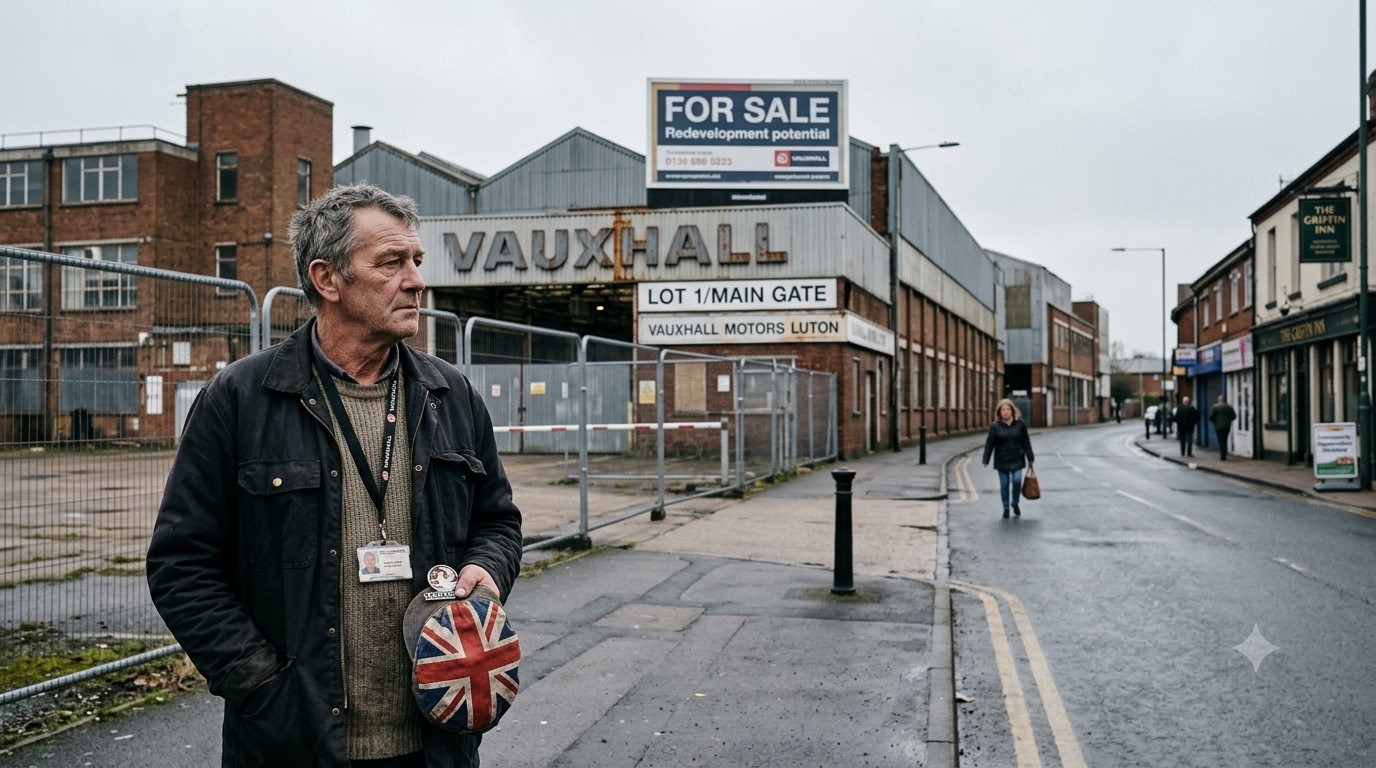
The continuing economic fallout from the closure of Vauxhall’s Luton plant offers a warning that Britain’s industrial decline is not simply an economic problem — it is also a political one.
The Luton factory, which had provided employment for generations, closed in 2025, leaving around 1,600 workers without jobs. A year later, a Unite report found that roughly 30% of former workers remained unemployed, while many others were dealing with lower incomes and reduced economic security.
The deeper concern is what happens when communities lose more than a workplace. Manufacturing jobs can support local businesses, families and public services. When major employers disappear, the effects can spread through an entire town.
There is also a political consequence. The Luton experience has reportedly contributed to some former workers moving away from Labour towards Reform UK, reflecting frustration with established political parties and the perception that government has struggled to protect industrial communities.
Britain therefore needs an industrial strategy that goes beyond announcements about investment. Workers need credible pathways into new employment, communities need long-term investment and businesses need confidence that manufacturing can remain competitive in Britain.
If politicians want to rebuild trust with working-class voters, protecting the economic foundations of their communities must become a central part of that effort.
UKEcho News brings you accurate, independent reporting from across the UK and beyond.
Comments (0)
Sign in to join the discussion.
Be the first to comment.