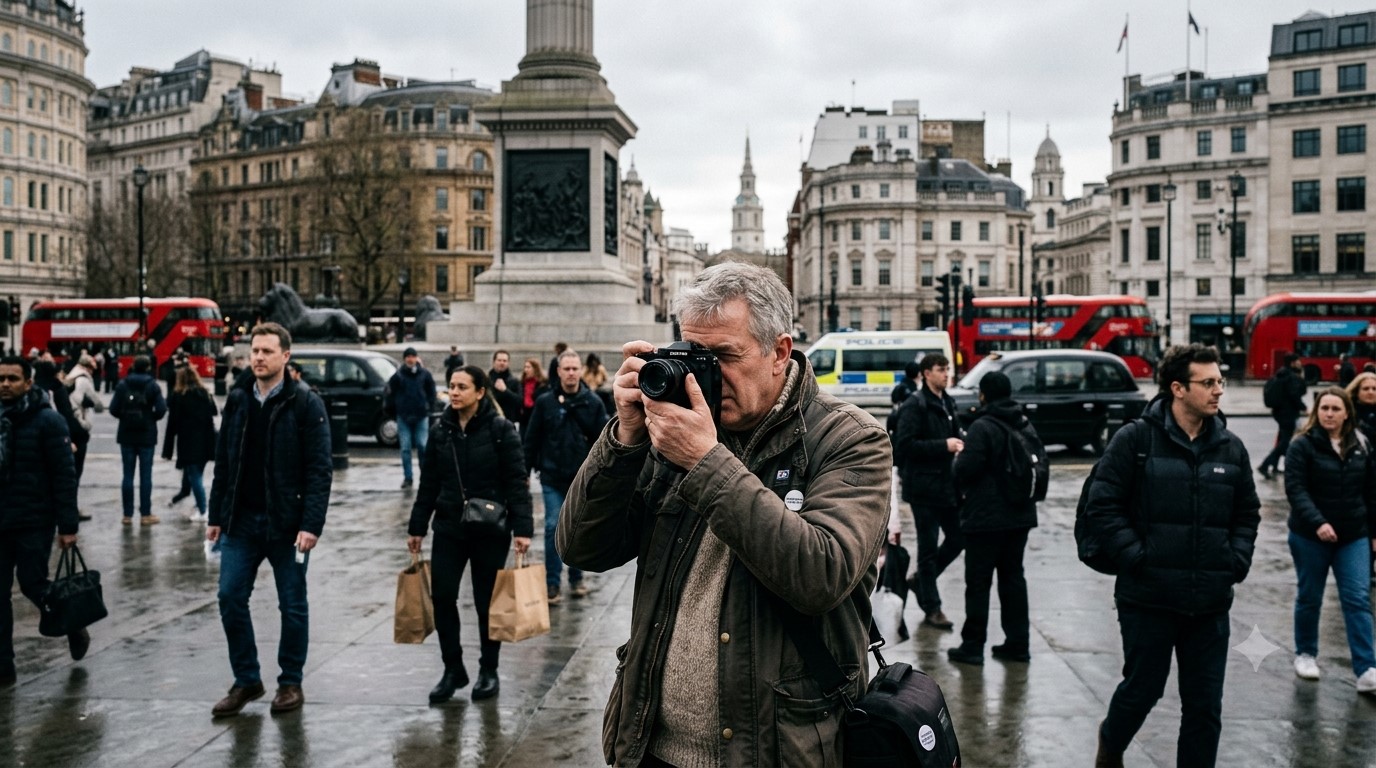
A new controversy over photography in public places is raising wider questions about civil liberties, government communication and the rights of journalists and ordinary members of the public.
The debate follows criticism of a Home Office booklet and poster aimed at asylum seekers, which reportedly advises people that they should not photograph or record someone without permission, including in public places such as streets and parks. Photography organisations have argued that this wording could give people a misleading impression of the law.
The issue matters beyond photography. Street photographers, journalists, documentary filmmakers and citizen reporters regularly work in public spaces, where images can become an important record of events and everyday British life.
UK government copyright guidance already states that permission is not required to photograph buildings, sculptures and similar works displayed in public spaces.
The controversy therefore raises an important editorial question: when government guidance is intended to protect people, could unclear wording unintentionally discourage lawful activity?
There is a legitimate need to respect privacy and prevent harassment, particularly when vulnerable people are involved. But public guidance should also be precise enough to distinguish between privacy protections and a general ban on photography.
For a democratic society, clarity matters. Citizens should understand both their responsibilities and their lawful freedoms.
UKEcho News brings you accurate, independent reporting from across the UK and beyond.
Comments (0)
Sign in to join the discussion.
Be the first to comment.